Continuous care, updates, fixes, and prompt technical support.
A store ready for peak sales, not just an average day
A system that handles everyday traffic with ease can easily grind to a halt on the most crucial day of the year: Black Friday, a major campaign, or a marketplace rollout. The issue is rarely a single slow page—more often, it is a database struggling with checkout volume, inventory sync locking up the store, or a server running out of headroom.
We start with load tests to pinpoint where the system breaks. Then we implement targeted fixes: caching, background queues for heavy tasks, database optimisations, service decoupling, or infrastructure scaling. Once deployed, we re-test and prepare a dedicated action plan for peak day.
-
 Load testing before peak sales
 -
 Server and infrastructure scaling
 -
 Background queues for imports, emails, and integrations
 -
 Database ready for higher order volumes
 -
 Architecture built for new sales channels
 -
 Action plan and live on-call support for peak days
What can you entrust to our team?
We support online stores, web applications, B2B platforms, and SaaS products across all areas of technology. We handle new feature development, day-to-day updates, ongoing maintenance, monitoring, performance optimisation, and technical support for your business and marketing teams.
Feature development
We build new features, integrations, and automations that drive sales.
We monitor your store, manage backups, and keep your platform secure.
We diagnose and resolve bugs, outages, and store issues.
We speed up your store and streamline checkout to lift conversions.
We prepare your store for high traffic, surges in volume, and new channels.
Not sure where to start?
Tell us about your project. During a 30-minute consultation, we will point out what needs immediate attention and what can wait.
How we work
Stage
Action
Benefit
01
Audit and project handover
We review system architecture, code quality, infrastructure, deployment workflows, integrations, and potential technical risks.
- Clear plan
- Secure handover
02
Monitoring and protection
We set up monitoring for performance, application errors, SSL certificates, and critical business flows. We also implement infrastructure security, threat detection, and automated backup routines.
- Enhanced security
- Reduced downtime
03
Ongoing maintenance
We handle incoming requests, updates, bug fixes, and support. Every task goes into a transparent tracking system, so you always know what we are working on and where things stand.
- Prompt support
- Clear status
04
Development and optimisation
We build new features, integrations, automations, UX improvements, and technical optimisations that drive sales and operational efficiency.
- Better UX
- New capabilities
05
Scaling and long-term support
We analyse resource utilisation, optimise architecture, and adapt your setup to changing demands. We help prepare your platform for traffic spikes, new sales channels, and continued business growth.
- Stable growth
- Long-term support
Frequently asked questions
How does scaling differ from performance work?
Performance work reduces page load times and individual query durations, while scaling ensures the system can handle many more concurrent users and orders. A fast store can still crash under multiple times its normal traffic if the database, integrations, or hosting servers lack sufficient capacity. We frequently tackle both, but we always start with the real bottleneck.
How do you prepare an online store for Black Friday?
Well in advance, and based on testing rather than gut feeling. We simulate expected traffic and checkout volumes, pinpoint where the system slows down or throws errors, deploy optimisations, and re-test. For peak days, we establish an emergency action plan, a code freeze, and real-time on-call monitoring.
Is upgrading to a more powerful server enough?
Sometimes, but usually only temporarily. If your bottlenecks stem from blocking database queries, ERP synchronisation locks, or heavy operations executed on every page view, adding more server power merely shifts the problem without solving it. We first identify what is actually clogging the pipeline, and only then right-size the infrastructure.
Does scaling require rewriting the shop or application?
Most often, no. Targeted adjustments are usually enough: caching, shifting heavy tasks into background queues, adding indexes, optimising database queries, or decoupling specific services. We only recommend rebuilding larger system components when tests prove that the existing architecture cannot sustain the load.
What happens to ERP, warehouse, and marketplace integrations during high sales volume?
Integrations are one of the first areas we examine. As order volume surges, integrations frequently face delays, hit API rate limits, or slow down the storefront. We offload them to background queues and implement retries and monitoring so that adding a new sales channel never compromises existing operations.
What determines the cost and timeline of scaling a system for higher traffic?
It depends on the system’s current state, the projected growth rate, and the number of connected integrations. Preparing a store for a single promotional campaign requires a different scope than re-architecting for sustained, multi-channel growth. After conducting load testing and a technical audit, we outline exactly what needs fixing and provide a prioritised roadmap.
Draw on our experience
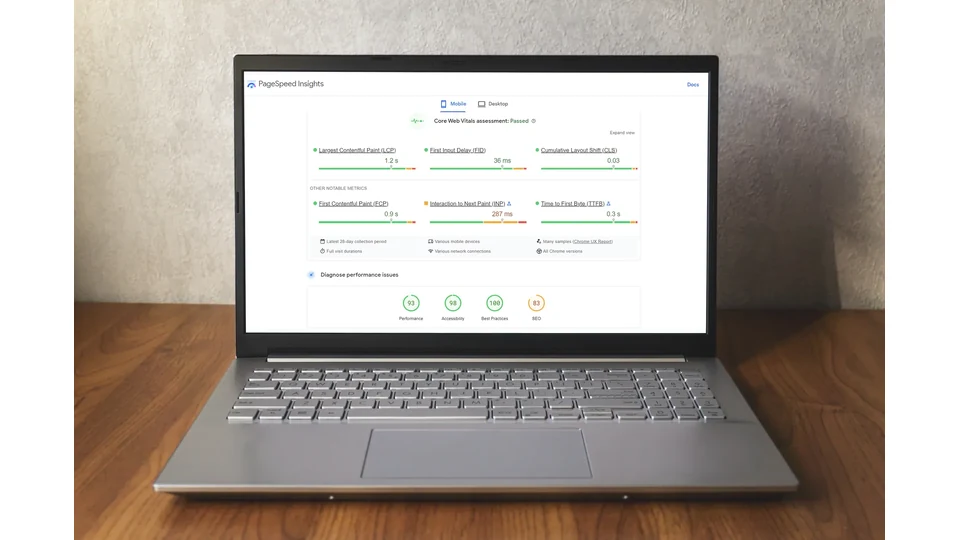
How to Speed Up WordPress: 15 Things PageSpeed Insights Won't Show You
16 minute read
Security and performance
You installed an official update and got a backdoor. Supply chain attacks on WordPress in 2026
12 minute read
Security and performance
How to Secure WordPress? Updates Alone Are No Longer Enough
12 minute read
Security and performance
