An online store designed for selling to retail consumers.
A marketplace is two products: one for buyers, one for sellers
A custom marketplace is not just an online store with more products. On one side are buyers who expect consistent rules, intuitive search, and a single checkout. On the other are sellers who need a simple dashboard, clear commissions, and predictable payouts. If either side is frustrated, the platform stops working.
That is why we start with the business model: who pays the commission, how split payments are processed, and who handles shipping, returns, and complaints. Only then do we select the tech stack and design features. We recommend launching with a version that validates the model on the market, followed by staged growth.
-
 Vendor dashboard for listings, orders, and payouts
 -
 Commissions, split payments, and settlements
 -
 Vendor onboarding and verification
 -
 Listing and review moderation
 -
 Search and filtering across the entire catalogue
 -
 Architecture built for growing traffic
What can you entrust to our team?
We create and scale e-commerce stores tailored to your business needs. We support both companies starting out in online sales and established store owners looking to boost performance, improve conversions, or restructure their technology.
An online store built for wholesale and business customers, with custom commercial terms.
A multi-vendor platform connecting multiple sellers and buyers in one place.
A tailored store built around custom business processes, features, and requirements.
A store ready for cross-border sales across multiple markets, languages, and currencies.
Secure migration of your store, customer data, and order history to a new platform.
Not sure where to start?
Tell us about your project. In a 30-minute consultation, we will point out what is worth doing now and what can wait.
How we work together
Stage
Action
Benefit
01
Business discovery and requirements analysis
We discuss your business model, sales processes, target audience, and growth roadmap. If you already run an online store, we also audit its architecture, performance, codebase, and areas for improvement.
- Tailored solution
- Clear requirements
02
Shopping experience design
We design the store structure, user journey, and UI to ensure buyer convenience and higher conversion rates. We pay special attention to product presentation, filtering, search, and the checkout process.
- Better UX
- Higher conversion
03
Store build and integrations
We build the store according to the approved designs, configure the e-commerce engine, and integrate it with payment gateways, logistics, ERP, CRM, marketplaces, and your other business tools.
- Process automation
- Smooth sales operations
04
Testing and launch
We test the checkout flow, payments, integrations, performance, security, mobile experience, and critical business logic. Once everything is verified, we launch your store into production.
- Rock-solid stability
- Sales readiness
05
Growth and continuous optimisation
We help increase the value of your store through performance work, UX improvements, ongoing feature development, process automation, and sales data analysis.
- Higher sales
- Better performance
How we deliver.
Our solutions have underpinned the steady growth of clients who trust us for years, and that is our best business card. Explore selected case studies to see how we turn technology into tangible business outcomes.
back-end
- laravel
- php
- java
- c++
- c#
- python
- docker
- redis
front-end
- typescript
- react native
- react
- vue.js
- sass
- blade
- smarty
- tailwindcss
cms
- modx
- webflow
- magento
- prestashop
- woocommerce
- wordpress
- drupal
- joomla
ai
- Llama
- Gemini
- Claude API
- Vertex AI
- OpenAI Platform

An online shop for tea and coffee
Piag Tea
- 2025
- e-commerce
While planning and delivering the project, Dock demonstrated professionalism both in customer service and in the quality of the work. Our experience with the company allows us to recommend Dock as a trustworthy partner.
Piotr Korzeniowski
Co-owner of Piag Tea


A dynamic e-commerce platform for a UK supplements distributor
Larevolution LTD Limited Company
- 2026
- e-commerce
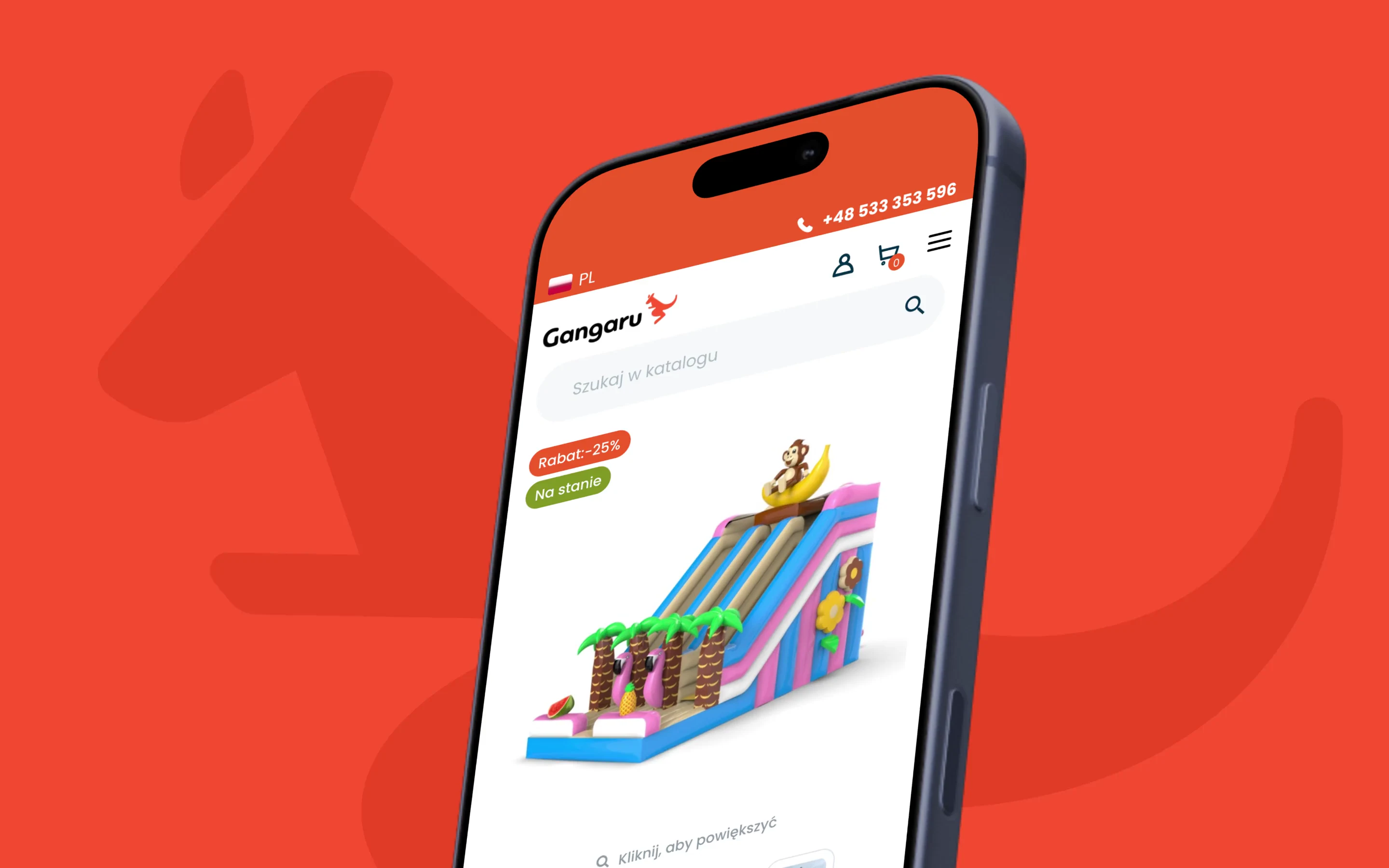
A global sales platform for inflatable attractions
Gangaru
- 2022
- e-commerce
I spent a long time looking for developers who can solve problems without needing weeks to do it. I got Dock's contact through a recommendation and I can wholeheartedly recommend the team! They come up with great ideas of their own, and if something breaks, they fix it right away.
Patryk Wozich
Operations Director at Gangaru


An e-commerce platform for large tent structures
gungan
- 2023
- e-commerce
Frequently asked questions
How does a custom marketplace differ from selling on Allegro or Amazon?
On a third-party marketplace, you are one of many sellers. On your own marketplace, you are the operator setting the rules.
You decide on commission rates, categories, vendor onboarding requirements, and the customer experience. If you only want to sell your own inventory on existing platforms, you do not need a custom marketplace build—what you need is marketplace channel integration for your store.
What does the process of building a marketplace look like?
We begin by defining the business model: user roles, money flow, vendor obligations, and the buyer journey.
Next, we select features for the initial release, choose the tech stack and a payment gateway capable of split payments between vendors, design the dashboards, and implement the platform in stages. Before launch, we test the full operational lifecycle: from product listing to checkout to vendor payout.
What determines the cost and timeline of building a marketplace?
It depends on your settlement model, the scope of the first version, and the chosen technology stack.
A curated platform for a dozen vetted sellers with a flat commission requires a very different setup than an open marketplace with self-serve registration, subscriptions, promoted listings, and direct integrations with vendors' software. That is why we provide a quote once the scope of the initial phase is agreed upon.
Can sellers sync listings from their own stores and systems?
Yes, provided we account for it in the architecture.
We can build CSV/XML file imports, direct API endpoints, or integrations with popular multi-channel sales management tools. The easier it is for vendors to import their inventory, the faster your platform gains momentum.
What happens after the marketplace is launched?
That is when the most important work starts: iterative development based on real user and seller behavior.
We provide ongoing technical care, continuous monitoring, and security management, introducing new features in phases as data guides what the platform needs. We also monitor and optimize performance as traffic and product listings scale.
Is it better to start with an off-the-shelf marketplace solution?
Sometimes, yes—particularly when your primary goal is to validate a concept quickly on a low budget.
Off-the-shelf tools, such as multi-vendor plugins for standard e-commerce platforms, handle conventional workflows well. However, if your payout rules, verification workflows, or order routing are non-standard, workarounds can quickly cost more than a custom build. We will help you assess which approach makes commercial sense for your current stage.
Draw on our experience
How to update WooCommerce safely and avoid downtime in your shop
7 minute read
Ecommerce maintenance
Your online shop is running slow. How do you pinpoint the bottleneck before upgrading your server?
9 minute read
Ecommerce maintenance
What Should Ongoing Technical Care for an Online Shop Include?
12 minute read
Ecommerce maintenance
